
Work this out for your cargoWhat it all costs, up to your warehouse To find out the total cost of your import, with taxes and charges in Chile.
Importing from China can seriously cut your costs, but coordinating it alone, supplier, freight, insurance, customs and transport to your warehouse, becomes a second job. And it only takes one slip: a botched tariff classification or an incomplete document, and your cargo sits at the port racking up storage day after day. This guide walks you through the whole process, step by step, so you know exactly what to expect before you put down a peso.
Why importing from China still pays off
China is Chile's main trading partner: during 2025 it accounted for 32.7% of the country's trade, with US$65,332 million, according to the SUBREI report. Behind that figure lies a concrete advantage for your company: the Chile-China FTA, in force since 2006, allows most manufactured goods to enter with a 0% tariff, provided you present the correct origin certificate.
In money terms: on a US$ 50.000 CIF order, that 6% tariff is US$ 3.000 you don't pay if you activate the treaty properly. But you only capture it if the process is set up right from the start.
The whole process, step by step
1. Vet the supplier before you wire money
Ask for samples, check that the company is registered, confirm production capacity and require the certificate of origin (Form F) to activate the FTA. A supplier who can't issue it costs you the full 6% tariff.
2. Set the Incoterm and calculate the landed cost
The FOB price isn't what the goods cost you delivered to your warehouse. Before closing the order, calculate the total cost in Chile: goods value + freight + insurance + tariff + VAT + clearance + domestic transport. That number is what determines whether the deal works or not.
3. Choose the freight: ocean, air or consolidated
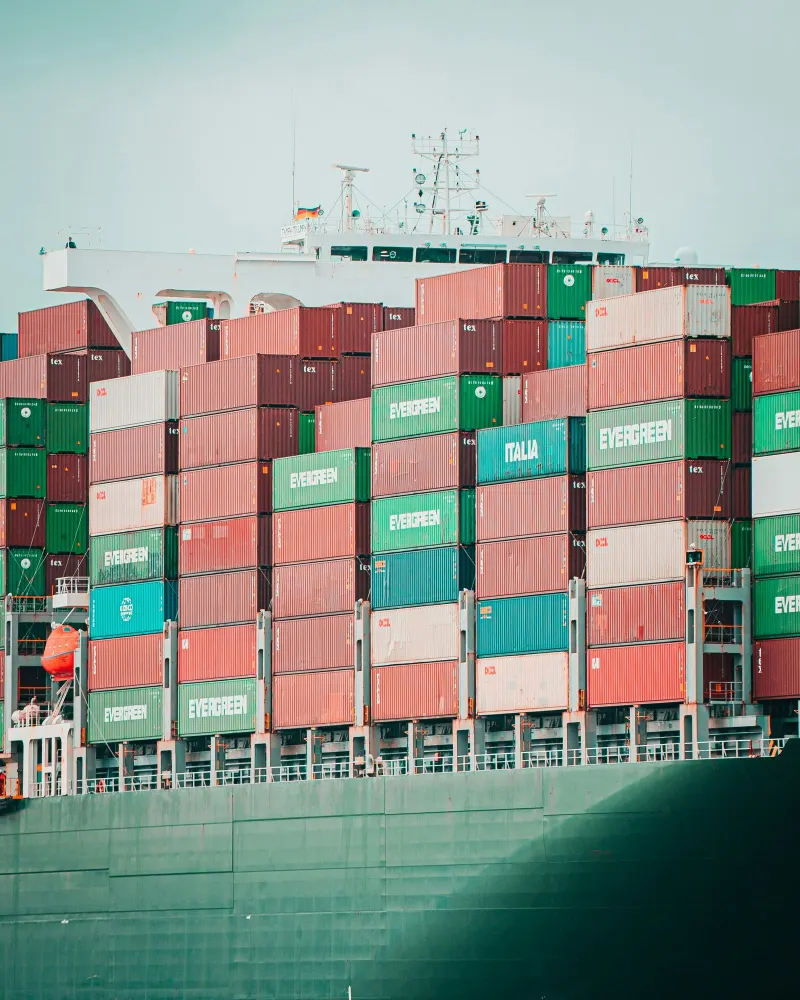
- Ocean FCL (full container): with August and October 2026 reference rates, worth it from about 19 m³. The ship takes 27 to 55 days port to port, depending on the port and the port calls.
- Ocean LCL / consolidated cargo: you share a container and pay only for the volume you use. Ideal for small volumes.
- Air: 7 to 12 days door to door, for urgent or high-value cargo.
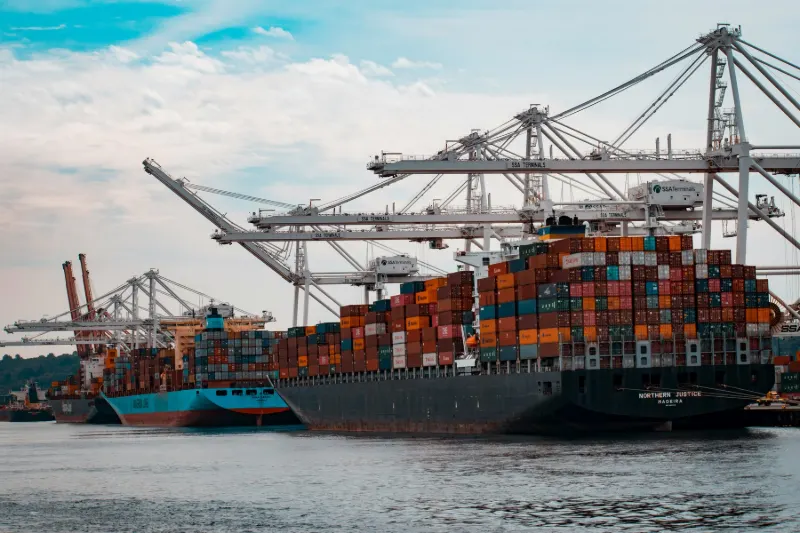
The usual origin ports are Shanghai, Ningbo, Shenzhen and Qingdao; at destination, San Antonio and Valparaíso.
4. Take out cargo insurance
If you buy FOB or EXW, the goods travel at your risk. Something almost no one tells you: if you don't present a policy at clearance, the National Customs Service (Servicio Nacional de Aduanas) estimates the insurance at 2% of the FOB value to calculate the duties, far above a real premium. In other words, not insuring doesn't just leave you exposed: it raises the base on which you pay taxes.
5. Customs clearance and DIN
For commercial imports over US$1,000 FOB, the law requires a licensed customs broker. They prepare and file the Import Declaration (DIN) electronically with the National Customs Service (Servicio Nacional de Aduanas), which then assigns a review channel. This is where misclassifying the goods costs you dearly: fines for errors can reach twice the duties omitted, and Customs can look back up to three years.
6. Pay the duties and taxes
On the CIF value (goods + insurance + freight) the tariff applies (6% general, 0% with an FTA) and then the 19% import VAT on the CIF plus the tariff. If your company files VAT, that 19% is recoverable as a tax credit on your Form 29: it's a cash-flow cost, not a final one. You have up to 15 days from the notification of the declaration to pay the duties.
7. Domestic transport to your warehouse
Collect the container within the port's free days (usually 3 to 7) and coordinate the inland freight. If you go past the deadline, storage and demurrage (demurrage) start running, and they can escalate until they exceed the international freight itself.
The mistakes that cost you the most
- Not requesting the Form F certificate of origin: you pay the 6% you could have saved.
- Under-declaring the value: Customs checks against reference prices and adjusts the base, fines included.
- Ignoring the SAG: if your product has any component of plant or animal origin, the SAG steps into the process and can hold the cargo.
- Not accounting for inland transport in the landed cost.
Mini-FAQ
Do I need a RUT and registration to import?
You need a RUT and a start-of-activities registration with the SII (Chilean tax service); there is no general importer registry at Customs. Above US$1,000 FOB, the clearance must also be handled by a customs broker.
How long does the whole door-to-door process take?
By ocean, counting the wait for departure, transit and clearance, it takes 33 to 73 days without counting manufacturing. By air, 7 to 12 days.
Does the tariff really drop to 0% with China?
Most manufactured goods do, but only with the certificate of origin. Without it, you pay the general 6% even if you're entitled to the exemption.
Official sources (in Spanish)
- Informe Comercial 2025: Comercio Exterior de Chile (SUBREI). China accounted for 32.7% of Chile’s trade in 2025, worth US$ 65,332 million.
- Acuerdo de Libre Comercio Chile-China (SUBREI). The agreement in force and 0% tariff for goods of Chinese origin, except the exclusion list.
- Oficio Circular N° 282 de 2015: TLC Chile-China, Certificado de Origen Form F (Servicio Nacional de Aduanas). The certificate of origin under the Chile-China FTA is the Form F.
- ¿Cuánto impuesto se paga al importar? (Servicio Nacional de Aduanas). 6% ad valorem duty on the CIF value and 19% VAT on CIF plus the duty.
- ¿Qué debo hacer para importar una mercancía? (Servicio Nacional de Aduanas). Above US$ 1,000 FOB, the importer must hire a customs broker.
Ready to stop coordinating on your own?
With SICE, a single person coordinates freight, insurance, customs and transport, and keeps you posted on your cargo. Start with a free complete quote.
With SICE, a single person coordinates freight, insurance, customs and transport, and keeps you posted on your cargo. Start with a free complete quote.
Other free tools
Most searchedWhen your cargo arrivesTo find out between which dates your cargo reaches your warehouse in Santiago.1 minuteMost searchedImport duty by countryTo see if you pay 0% or 6% duty and which paper to request.1 minuteBoxes and containersTo see how many boxes fit and whether to share a container or book one.1 minute