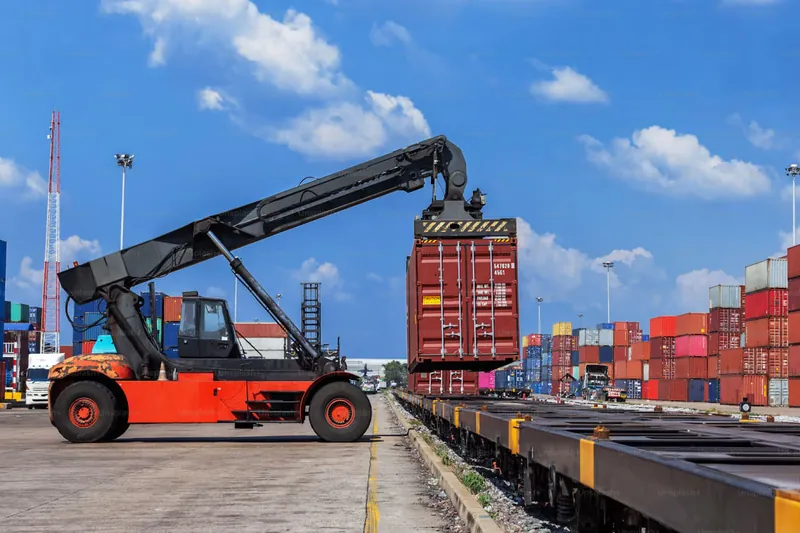
Your supplier sends you two prices, one FOB and one CIF. CIF looks more convenient because it already includes freight and insurance. The real difference appears in Chile, when an agent you did not choose sends you the bill.
In short: choosing FOB or CIF to import into Chile does not change the taxes, because Chilean Customs (Servicio Nacional de Aduanas) always calculates them on the CIF value, however you buy. What changes is who chooses the shipping line and the agent that charges the local fees in Chile, how many free days the container comes with and what the insurance covers. FOB leaves that control with you. CIF works when the supplier gives you, in writing and before shipment, the destination charges, the free days and the insurance policy.
What each party pays under EXW, FCA, FOB and CIF
Incoterms are the rules of the International Chamber of Commerce (ICC) that allocate costs and risks between seller and buyer. The current version is Incoterms 2020.
| Incoterm | The supplier pays and does | You pay and do | Where the risk passes to you |
|---|---|---|---|
| EXW | Has the cargo ready at its factory, without loading or exporting it | Pickup, export, freight, insurance, import | At the factory, before loading |
| FCA | Exports and delivers to the carrier you name | Freight, insurance, import | On delivery to the carrier |
| FOB | Exports and loads on board the ship you name | Freight, insurance, import, destination charges | On board, at the port of origin |
| CIF | The same, plus freight and minimum insurance to the Chilean port | Import, destination charges, transport to the warehouse | On board, at the port of origin |
Two things in the table often come as a surprise. Under CIF, the risk passes to you at the same point as under FOB: if the cargo is damaged during the voyage, the problem is yours even though the supplier paid the freight. And under all four terms, import clearance and taxes are the buyer's responsibility.
There are two more variants you will see in quotes. CFR is CIF without insurance. DAP goes as far as an address in Chile, but does not include customs clearance or taxes, and the exact address has to be written down. For containers, the ICC itself recommends FCA instead of FOB, because the cargo is handed over at the terminal before it goes on board.
Why does Customs always calculate on CIF?
Because Chilean law defines customs value as including transport and insurance up to entry into the country (Decree with Force of Law 31 of the Ministry of Finance, DFL 31 de Hacienda, articles 5 and 6). If you buy FOB, your customs broker (agente de aduana) adds the freight and insurance you can prove with the transport document and the policy or certificate.
When you cannot prove them, Customs applies notional values: 2% of FOB as insurance and 5% of FOB as ocean freight. An example: FOB US$10,000, proven freight of US$1,000 and insurance without supporting documents. US$200 of notional insurance is added and the base becomes US$11,200. That 2% raises the taxes and covers you for nothing, because it is not a policy. How to actually insure cargo is explained in open cover policy and cargo insurance.
The same shipment bought FOB and CIF
We take the 20-foot container from China in the article on landed cost delivered to your warehouse, with the same assumptions in both columns: goods worth US$5,150, freight of US$4,800, insurance of US$50 and US$1,298 for local charges, customs broker and truck. These are example figures for doing the math, and your quote will have your own.
| Line (US$) | FOB purchase | CIF purchase |
|---|---|---|
| Supplier invoice | 5,150 | 10,000 |
| Freight you book (assumption) | 4,800 | Included |
| Insurance you buy (assumption) | 50 | Included (minimum coverage) |
| Customs value | 10,000 | 10,000 |
| Tariff (0% with FTA, 6% without FTA) | 0 or 600 | 0 or 600 |
| Import VAT | 1,900 or 2,014 | 1,900 or 2,014 |
| Local charges, broker and transport (assumption) | 1,298 | 1,298 |
| Cost with FTA | 11,298 | 11,298 |
The cost does not include VAT because a company that files VAT recovers it as a tax credit. With identical conditions, the result is identical. The difference arises when the conditions are no longer the same, and under CIF they are set by the transport contract the supplier signed.
Let's change just one thing. Suppose that in the FOB purchase your forwarder negotiated 10 free days to return the container, while the supplier's booking comes with the 5 the shipping line publishes, and that you return the empty container on day 10. Under FOB you pay nothing. Under CIF you pay 5 days at US$110, the daily rate Maersk publishes for a 20-foot dry container: US$550. The CIF purchase ends up at US$11,848.
Percentages circulate on how much more expensive CIF turns out to be, but none of them comes with a published calculation method. It is more useful to do this same math with the two prices your supplier sent you.
What is the practical problem with buying CIF?
The supplier chooses the shipping line or the forwarder, and with that, the agent that releases your cargo in Chile is also chosen. That agent charges according to its own rate sheet, which you only see once the container has arrived. To give you an idea of the type of charge, the rate sheet Maersk publishes for Chile includes BL issuance (US$70 plus VAT), BL correction (CLP 50,000 plus VAT) and late warehouse change (CLP 100,000 plus VAT).
Industry guides also warn about handling charged twice, charges with vague names and minimum billing on consolidated cargo, where you are charged a minimum volume even if your cargo takes up less. There is no official record measuring how often this happens, and a charge that appears on arrival is not illegal for that reason. The difficulty is that nobody budgeted for it and that delivery is conditional on payment.
Insurance is the other weak point. CIF only obliges the supplier to buy minimum coverage (clause C of the Institute Cargo Clauses), which is narrower than clause A. For machinery or delicate cargo, it is best to agree on clause A coverage in writing and ask for the policy.

When does buying CIF make sense?
When the supplier gets better freight than you can and agrees to show what it booked. The comparison is made on the total cost up to your warehouse. Before accepting a CIF price, ask for this:
- Name of the shipping line or forwarder and of its agent in Chile.
- Written quote for the local charges: item, amount, currency and VAT.
- Which discharge and which THC are included in the freight the supplier pays.
- Free days in the booking, and the demurrage and storage rate afterwards.
- Insurance policy or certificate, with coverage and claims procedure.
- A clause that makes the supplier responsible for anything it did not disclose before shipment.
If the supplier does not provide points 1, 2 and 4, buy FOB (or FCA) and book the freight yourself. What starts running when the free days run out is covered in demurrage, free days and storage.
What SICE does in this case and where its responsibility ends
When you buy FOB, SICE coordinates the leg that is in your hands: it quotes international freight with forwarders from its network, insurance under its open cover policies, customs clearance with a trusted customs broker and transport to your warehouse. Before shipment it contacts the supplier and reviews the invoice, packing list, certificate of origin and transport document. SICE is not a shipping line, an insurer or a customs broker: the shipping line's rates, the policy and the declaration to Customs belong to each of them.
Frequently asked questions
Do I pay less tax if I buy FOB?
No. The tariff (6%, or 0% with an FTA) and VAT (19%) are calculated on the customs value, which includes freight and insurance in both cases.
Does CIF mean the cargo arrives at my warehouse?
No. It arrives at the Chilean port. Import clearance, local charges and the truck are on you.
What happens if I have no way to prove the insurance?
Customs adds notional insurance of 2% of the FOB value to the tax base. You pay more tax and still have no coverage.
What is FCA and when should I ask for it?
It is the term under which the supplier exports and delivers the cargo to the carrier you name. The ICC recommends it instead of FOB when the cargo travels in a container, because it is handed over at the terminal before it goes on board.
Official sources (in Spanish)
- ICC: Incoterms 2020 Current rules and the insurance coverage required under CIF.
- ICC Academy: CIF and CIP in Incoterms 2020 Difference between insurance clauses C and A.
- BCN: DFL 31 of the Ministry of Finance Defines customs value with transport and insurance included.
- Customs: Compendium of Customs Regulations, Chapter 2 Notional insurance of 2% and notional freight of 5% of FOB.
- Customs: How much tax do you pay when importing? Tariff and VAT on the CIF value.
- Maersk: local import information for Chile Published local charges, free days and demurrage.
If you have the supplier's two prices on the table, send them to us and we will compare them delivered to your warehouse. Ask for the free complete quote or write to us on WhatsApp at +56 9 9872 6863.