
With a supplier in Lima, Bogotá or Medellín, everything looks simpler: the same language, a few days of travel and zero duty. The part that tends to get tangled is a different one, because to import from Peru to Chile, or from Colombia, there is more than one trade agreement available and each one asks for its own certificate.
In short: products originating in Peru and Colombia enter Chile at 0% duty instead of 6% if they arrive with the certificate of origin of the agreement you invoke, whether the bilateral one or the Pacific Alliance (Alianza del Pacífico) one. The 19% VAT (IVA) is paid all the same. In Peru the certificate is issued by a certifying entity, and in Colombia by Colombia's tax and customs authority (DIAN). Food, plant products, cosmetics and medicines also need approval (visto bueno) from the relevant Chilean agency.
Which agreement should you invoke to import from Peru to Chile or from Colombia?
You have two routes with each country, and both lead to the same duty when the product qualifies.
The bilateral agreements are the most direct. Chile's agreement with Peru has been in force since 2009 and has covered all trade at zero duty since 2016. Chile's agreement with Colombia has also been in force since 2009, with the entire tariff universe liberalized since 2012.
The Pacific Alliance Protocol, in force since 2016, brings together Chile, Peru, Colombia and Mexico. It set 92% of tariff lines at zero immediately and the rest on schedules and with exceptions, such as sugar. Its advantage is cumulation of origin: originating inputs from one member country count as local when manufacturing in another, under the conditions set by the agreement itself.
The practical rule works like this. If the product is made in a single country with inputs from that country, the bilateral agreement covers it. If your Peruvian supplier manufactures with Colombian or Mexican materials, the Pacific Alliance may be the way for the product to qualify as originating. In both cases, an invoice coming from Lima or Bogotá does not prove origin.
With a CIF value of US$10,000, the difference between arriving with a valid certificate or without one is paying US$1,900 in VAT or paying US$2,614 in duty and VAT.
Peru vs. Colombia: certificate, routes and times
There is no official timeframe for these routes. The times in the table are market references, checked in October 2026.
| Peru | Colombia | |
|---|---|---|
| Bilateral agreement | In force since March 2009 | In force since May 2009 |
| Who issues the certificate | Certifying entities (chambers and trade associations) delegated by Peru's foreign trade ministry | DIAN, Colombia's tax and customs authority |
| Validity of the bilateral certificate | 1 year from issue | 1 year from issue |
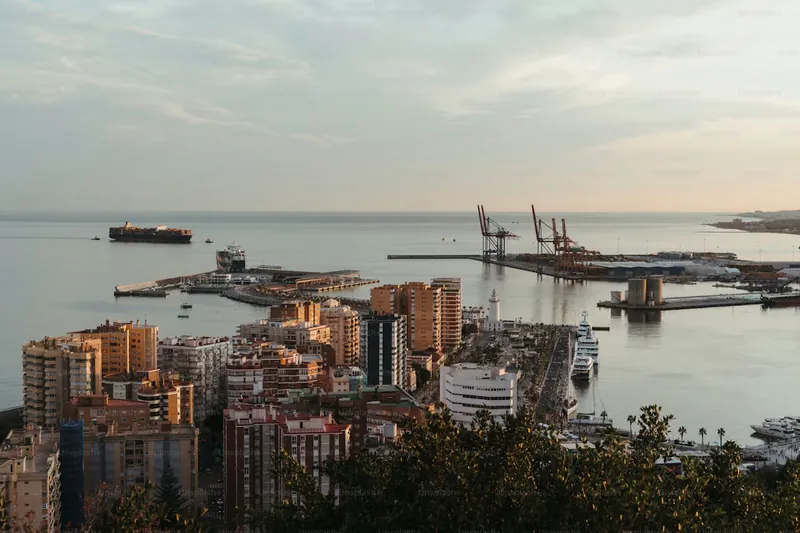
| Ports of departure | Callao | Cartagena and Buenaventura |
| Ocean transit to San Antonio | 3 to 5 days on a direct service; 5 to 7 with a port call | 11 days from Buenaventura; 14 days from Cartagena |
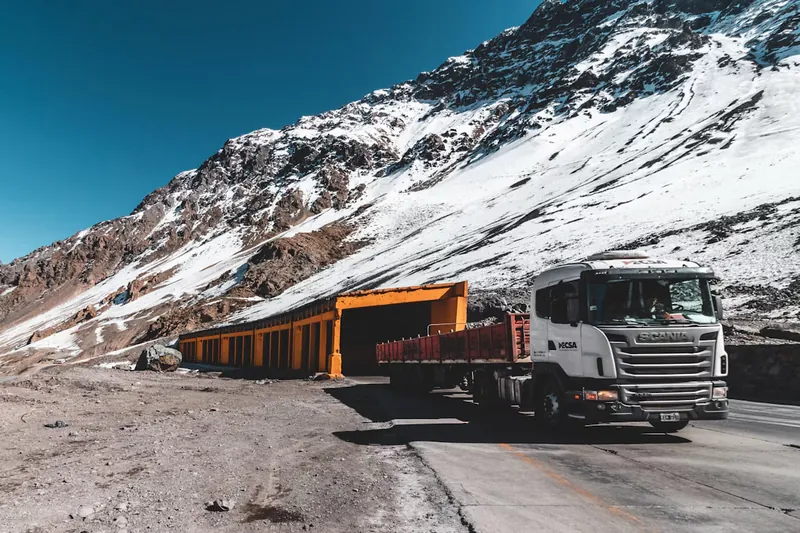
| Truck | 3 to 5 days from Lima to Santiago via Tacna and Arica, including formalities | No published references for a road route to Chile |
| What Chile imports most | Molybdenum and copper concentrates, sulfuric acid, avocados, fish oil, cocoa butter | Coal, refined sugar, tuna, coffee extracts, medicines, perfumes |
Note: the times from Peru are those published by logistics operators. The times from Colombia come from a shipping line's service sheet, published in 2025 and with no contractual value.
Each agreement has its own form. The certificate under the Peru agreement, the one under the Colombia agreement and the Pacific Alliance one are not interchangeable, so claiming the preference of one agreement with another agreement's form is the same as arriving without a certificate.
Under the Pacific Alliance, the certificate travels electronically between each country's single windows, and Chilean Customs (Servicio Nacional de Aduanas) receives it that way. That is why the PDF your supplier forwards to you may come without a signature or stamp: what counts is the electronic document. The general concept and the mistakes that lose the preference are covered in the guide on certificate of origin and 0% duty.

Ship, truck or plane?
Ocean
This is the option for volume and planned restocking. From Callao there are direct services and services with port calls to San Antonio and Valparaíso, plus connections to Arica and Iquique if your warehouse is in the north. From Colombia there are departures from Buenaventura and from Cartagena, with about three more days of sailing from Cartagena. The days in the table are sailing time only: you still need to add the wait for departure, customs clearance and transport from the port.
Land
This works from Peru, via Tacna and the Chacalluta border complex in Arica. Cargo hours are shorter than car hours: according to the official April 2026 bulletin, freight transport is served from 08:00 to 24:00 and agricultural cargo from 08:00 to 18:00, while light vehicles cross 24 hours a day. The truck carries a road waybill (carta de porte) and a manifest, as at any land crossing. From Colombia there are no published references for a road operation to Chile, so the options to compare are ship and plane.
Air
Air is justified for urgent spare parts, samples or high-value cargo from Lima or Bogotá. Before committing to a date, ask for a confirmed flight and the airline's acceptance of the goods, especially if they contain batteries. The cost comparison is in ocean freight vs. air freight.
Which products need approval in Chile?
A good share of what is bought in Peru and Colombia is food, agricultural products or personal care products, and for these, zero duty is not enough to release the cargo.
- Packaged food (roasted coffee, chocolates, canned goods, sugar): the regional health authority (Seremi de Salud) first issues a customs destination certificate (certificado de destinación aduanera), which only authorizes moving the cargo to a warehouse, and then the use and disposal authorization (autorización de uso y disposición), which allows you to sell it. It may ask for a technical data sheet in Spanish, a health certificate from the country of origin and the label.
- Plant products (fruit, grains, green coffee, cocoa beans): the Agricultural and Livestock Service (Servicio Agrícola y Ganadero, SAG) sets requirements by species and country. If none exist for your product, you have to request a risk analysis that has no committed timeframe, so check before buying.
- Cosmetics, perfumes and medicines: these go through the Public Health Institute (Instituto de Salud Pública, ISP).
Details by agency are in SEC, ISP, SAG and SUBTEL permits.
Mistakes that cost money on these routes
- Claiming the preference of one agreement with another agreement's form.
- Treating as originating a product made with inputs from outside the agreement.
- Confusing the ship's arrival date with the delivery date at your warehouse.
- Scheduling a truck based on Chacalluta's light-vehicle hours.
- Shipping food without having checked the label and the health certificates.
The list of papers worth having ready before arrival is in documents to import into Chile.
What SICE does in this case and where its responsibility ends
SICE coordinates the operation through its network: freight forwarders for ocean or air freight, trusted customs brokers (agentes de aduana) for the declaration, domestic transport and cargo insurance. Before shipment, SICE contacts your supplier and reviews the invoice, packing list, certificate of origin and transport document. The certificate is issued by the entity in the country of origin, the declaration is filed by the customs broker, and approvals are handled by the Seremi de Salud, SAG or ISP. Your point of contact is a single partner from start to finish.
Frequently asked questions
Can I use the Pacific Alliance certificate and the bilateral one at the same time?
There is no need. The preference is claimed under one agreement, with that agreement's certificate.
How long is the certificate of origin valid?
Under the bilateral agreements with Peru and with Colombia, one year from issue. For the Pacific Alliance certificate, confirm the validity with your customs broker before shipping.
Does Colombian sugar pay duty?
Sugar is among the Pacific Alliance exceptions and has its own treatment. Before buying, you need to check the exact tariff code.
Do I need a customs broker?
Yes, when the import exceeds US$1,000 FOB.
Official sources (in Spanish)
- SUBREI: Chile-Peru Free Trade Agreement: entry into force and tariff phase-out.
- SUBREI: Chile-Colombia Free Trade Agreement: entry into force and tariff phase-out.
- SUBREI: Pacific Alliance: Additional Protocol, schedules and cumulation.
- Customs: Pacific Alliance Trade Protocol: rules on the electronic certificate of origin.
- ChileAtiende: use and disposal authorization for imported food: procedure before the Seremi de Salud.
- Border Crossings Unit: status and hours of the border complexes: cargo hours at Chacalluta.
If you are evaluating a supplier in Peru or Colombia, ask for the free complete quote: the total landed cost delivered to your warehouse, in writing, with firm freight, insurance, transport and fees, and estimated taxes. You can also write on WhatsApp to +56 9 9872 6863.